The National Committee on Geological Sciences (NCGS), with the participation of the University of the Philippines National Institute of Geological Sciences (UP NIGS), conducted an assessment of the Mount Apo Natural Park (MANP) from 17 to 26 August 2026. Located within the provinces of Davao del Sur and Cotabato, the geopark encompasses Mount Apo and several nearby volcanic centers that highlight the area’s complex geology and rich culture. UP NIGS was represented by Mr. Nikko Balanial, who joined geologists from other NCGS member agencies, particularly the Department of Environment and Natural Resources-Mines and Geosciences Bureau (DENR-MGB) and the Department of Science and Technology-Philippine Institute of Volcanology and Seismology (DOST-PHIVOLCS).

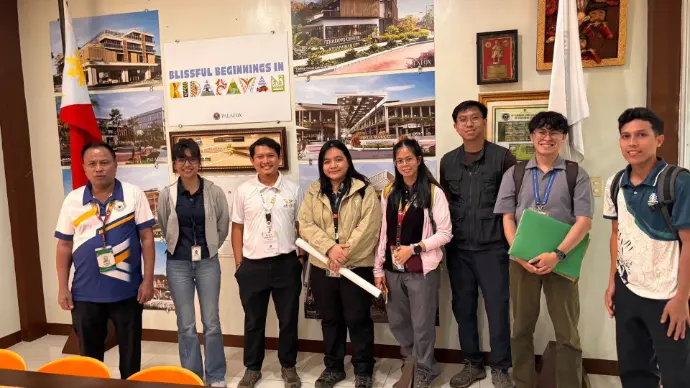
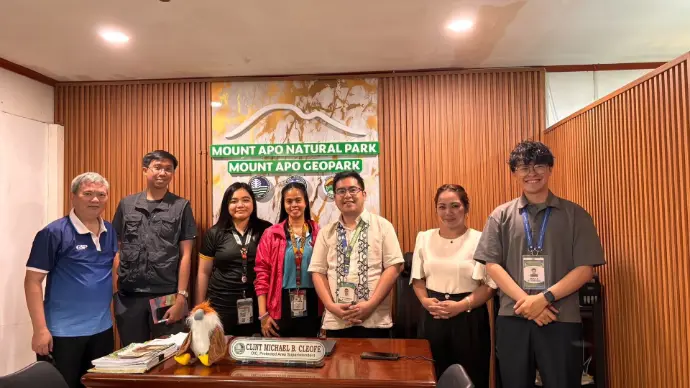
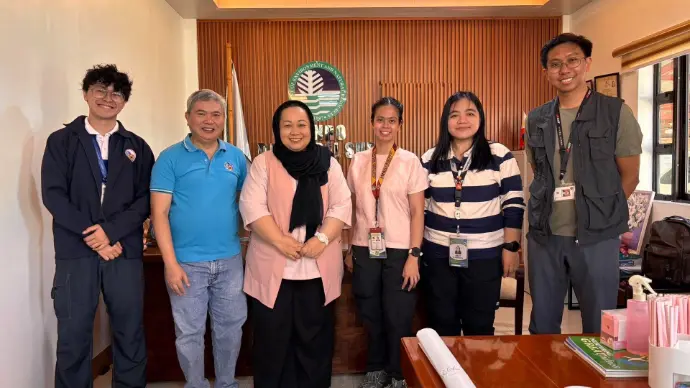
Members of the National Committee on Geological Sciences (NCGS), comprising geologists from UP NIGS, DENR-MGB, and DOST-PHIVOLCS, during courtesy calls and coordination meetings with the Kidapawan City Tourism Office (upper left), Digos City Tourism Office (upper right), Mount Apo Natural Park (lower left), and DENR Region XI (lower right).
The activity aimed to establish the technical foundation for the proposed declaration of Mount Apo as a National Geological Monument. Such a designation seeks to promote and conserve the geoheritage and geodiversity of significant sites in the Philippines while recognizing their scientific, cultural, educational, and environmental importance.
The assessment focused on establishing the geological significance of the geopark, evaluating existing geoheritage sites, and documenting the relationship between local communities and Mount Apo’s geological and cultural heritage. The team visited and assessed several sites within and around the geopark, including locations of geological, ecological, and cultural significance. Courtesy calls and coordination meetings with local government units and other stakeholders were also conducted to better understand ongoing efforts by surrounding communities to preserve and promote the geopark’s geological and cultural heritage.
One of the highlights of the activity was the ascent to Mount Apo, the country’s highest peak. Mr. Balanial, together with a team from MANP, undertook the traverse. The visit provided an opportunity to observe the geopark’s rich flora and fauna alongside the diverse geological features that characterize the area. The traverse also highlighted volcanic deposits and other geological evidence that provide important insights into the eruptive and geologic history of Mount Apo.
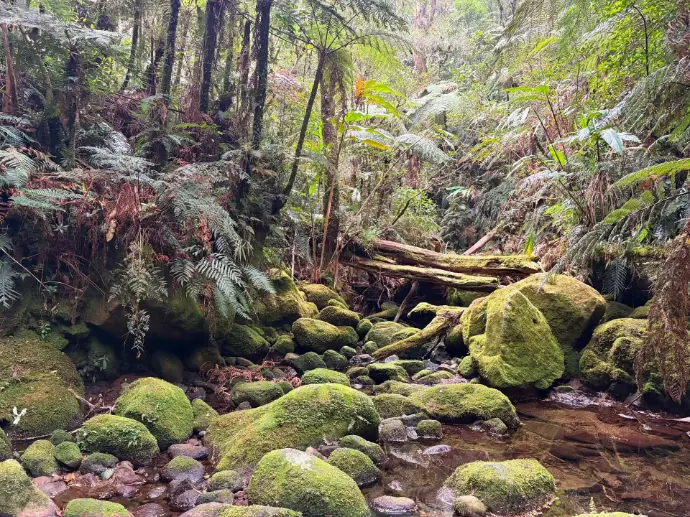

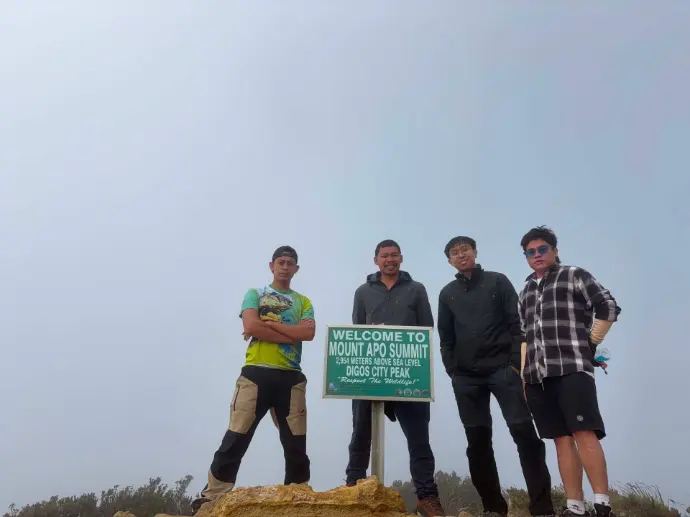
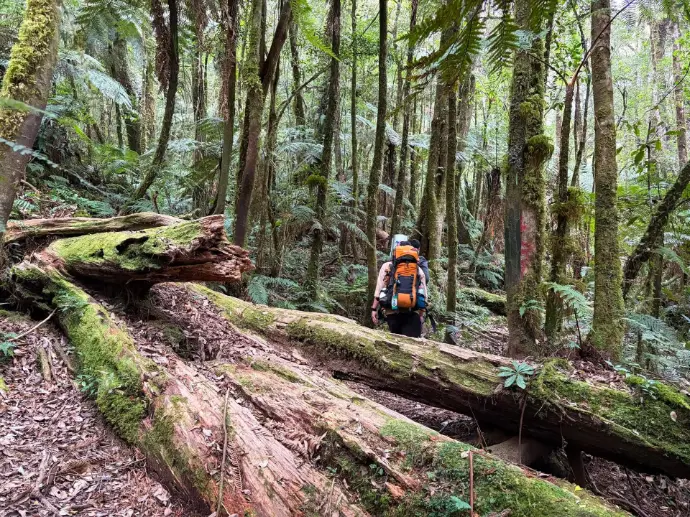
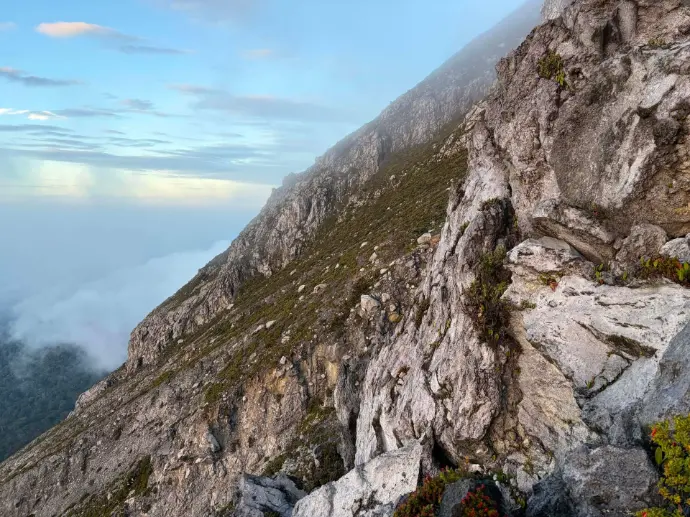
The rich flora and fauna observed along the forested section of Mount Apo (upper photos). Large boulders and steep slopes at higher altitudes illustrate the diverse geological processes that have shaped the volcano (lower left). The UP NIGS and Mount Apo Natural Park teams at the summit of Mount Apo (lower right).
The assessment underscored the close relationship between nature, geology, culture, and society within Mount Apo. Beyond documenting its outstanding geological features, the activity highlighted the importance of integrating geological and cultural heritage in the conservation and sustainable development of the area. The proposed designation of the Mount Apo Geopark as a National Geological Monument represents an important opportunity to further recognize, protect, and promote one of the Philippines’ most significant geological landscapes.